
API Development 101 For Growing SMEs: Types, Costs, Timelines And Real-World
Use Cases
If you are growing an SME, your systems are probably bursting at the seams. Sales data sits in your CRM while orders live in your e‑commerce platform, finance is in accounting, and operations juggle spreadsheets. APIs
connect those islands so your team does less rekeying and you get consistent, real time data. This guide explains what an API is, the common types, the process and skills involved, UK pricing drivers, and practical use
cases you can copy. You will also see how Atula reduces risk with discovery, documentation, staging, and managed rollout so you can move fast without downtime.
What is an API, in plain English?
An API, short for Application Programming Interface, is a structured way for software to talk to other software. Think of it as a menu, it lists what data and actions a system offers, with rules for how to request them and
what you will get back. For SMEs, APIs let your website create orders in your ERP, your CRM update customer records in the warehouse system, or your PMS push bookings to housekeeping. That is API development in
practice, designing and building those menus so systems can exchange data reliably, securely, and at speed.
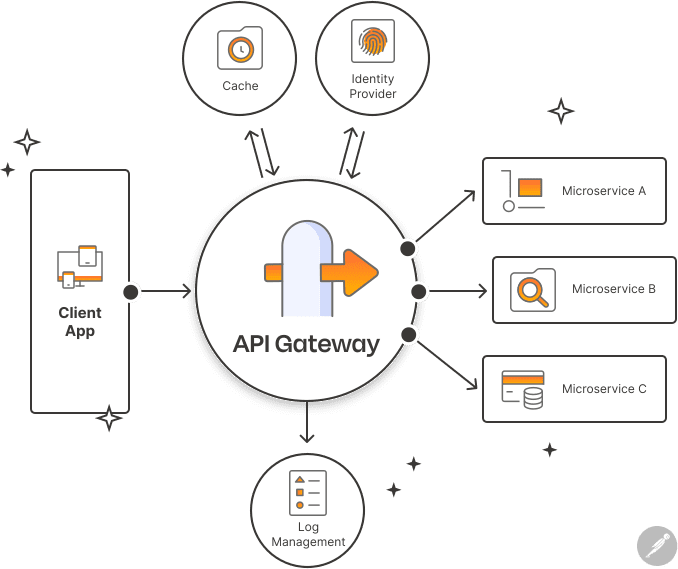
What does an API service do? It exposes business capabilities in a clean, documented way, enforces security, validates inputs, transforms data, and logs what happened. It is the backbone of automation and data consistency.
API vs integration, what is the difference?
API: the interface itself, a standard contract that systems can call.
Integration: the end-to-end connection that uses one or more APIs to sync data or trigger workflows.
You can have an integration that uses CSV files or SFTP without an API, but it is less flexible, slower to change, and harder to secure. Not all integrations are APIs, but most modern integrations rely on APIs because they are faster to build, easier to monitor, and friendlier to versioning.
A web API is simply an API available over HTTP. An integration is the project that applies business rules, mapping, and scheduling around that web API to deliver an outcome, for example, reconcile payouts every night and
update invoices.
The four common API types you will use
REST: the most popular style for web APIs today. Uses simple HTTP verbs, returns JSON, and plays nicely with browsers and mobile apps. The four pillars of REST API design are resource identification, standard
HTTP methods, stateless communication, and representations such as JSON that describe resources.
SOAP: an older, strict protocol using XML and formal contracts. Still common in finance, logistics, and legacy enterprise systems where strong typing and formal standards are required.
GraphQL: a query language that lets clients ask for exactly the fields they need in one call, helpful for complex UIs and mobile bandwidth.
Webhooks: reverse APIs, your system exposes a URL and another system sends you events in real time, for example, payment succeeded or shipment delivered.
Which API is most popular? For SMEs and modern SaaS, REST leads, with webhooks frequently used for event notifications.
Is Postman an API integration tool? Postman is a developer tool for designing, testing, and documenting APIs. It is not an integration platform for production workloads, but it is invaluable during development and QA.
Skills you need for API development
Design first thinking: define resources, endpoints, data models, and error codes before building. Use an OpenAPI specification for clarity and alignment.
Security: authentication and authorisation, TLS, input validation, rate limiting, secrets management, logging, and audit trails.
Versioning: plan for change without breaking clients, for example, v1 and v2 routes, or explicit schema negotiation.
Testing: unit tests, contract tests, integration tests, performance tests, and negative testing for edge cases.
Reliability: idempotency, retries with backoff, circuit breakers, and graceful timeouts.
Documentation and DX: clear examples, Postman collections, and change logs; a good developer experience reduces support tickets.
Monitoring: metrics, tracing, and structured logs to spot issues early.
Deployment: CI/CD pipelines, staging environments, blue green or canary rollouts, and rollbacks.
Can you develop your own API? Yes. If you have in house capability, start with a narrow scope, adopt OpenAPI and a design checklist, and ship a secure MVP. If you need a partner, lean on a team that has delivered APIs
across CRM, ERP, finance, and logistics.
The API development process, done properly
At Atula we follow a design led, low risk sequence that fits SME budgets and timelines:
- Discovery and scoping: map your data, events, and workflows; prioritise a small set of endpoints that unlock clear ROI.
- Design and documentation: produce an OpenAPI spec, define models and error codes, draft security and rate limits, prepare sample requests and responses.
- Build and test: implement endpoints, add validation and logging, create automated tests and Postman collections, run performance and security checks.
- Staging and pre launch validation: deploy to a staging environment that mirrors production; run end to end tests with your CRM, ERP, PMS, and payment gateways.
- Managed rollout: schedule releases in off peak windows, use feature flags or canary routes, and monitor closely for regressions.
That is API process development distilled, a predictable path from idea to stable adoption.
Real world SME use cases you can adopt
CRM and ERP sync: automatically create a sales order in your ERP when a deal is won in your CRM, reserve stock, and trigger fulfilment.
Payments: take a card payment on your site, receive a webhook when funds settle, and reconcile in your accounting system nightly.
Shipping and logistics: book labels, get tracking numbers and delivery statuses, and notify customers by SMS or email.
Hospitality PMS: connect your PMS to a guest app so bookings, room readiness, housekeeping, and maintenance requests stay in sync.
These patterns typically sit alongside wider systems work such as web app development services or bespoke software development when you consolidate workflows into a single view.
Costs, timelines, and what drives the budget in the UK
Every API project is unique, but four factors dominate cost and duration:
Scope and complexity: number of endpoints, data models, and custom business rules.
Security and compliance: stronger controls, audit, and penetration testing add effort, especially in finance or healthcare.
Integrations: the number and quality of third party APIs, rate limits, and quirks in legacy systems.
SLAs and uptime targets: high availability, observability, and load requirements increase infrastructure and engineering time.
Indicative ranges for SMEs:
Simple REST API, 5 to 10 endpoints, basic auth and CRUD, single integration, 3 to 6 weeks.
Moderate complexity, 10 to 25 endpoints, OAuth, webhooks, retries, two or three integrations, 6 to 12 weeks.
Advanced workflows, complex mapping, strict SLAs, audit trails, multi region, 12 plus weeks.
Infrastructure, security tooling, and ongoing support are separate line items. We scope with you so deliverables and acceptance criteria are clear, and we prioritise ROI so you see value early.
Does an API make money? Yes, directly through monetised access tiers or indirectly by cutting manual admin, reducing errors, and unlocking new channels. Monetisation options include free tier with rate limits, paid tiers
per call or per seat, partner revenue share, or bundled access with your product.
Examples that answer common questions
What is an example of API integration? Your e‑commerce site uses a shipping API to get real time rates at checkout, creates a shipment when the order is paid, and listens for a delivered webhook to close the loop in your CRM.
What is an API and give examples? Stripe for payments, Shopify or Magento store APIs for orders and products, Xero for invoices, and Opera PMS in hospitality; all expose APIs that your systems can call.
Are all integrations APIs? No, some are file based or RPA based, but APIs are more maintainable.
Which API type should I choose? For most SMEs, REST with JSON plus webhooks for events; adopt GraphQL if your UI suffers from under fetching or over fetching; choose SOAP only when a partner mandates it.
How Atula reduces risk for SMEs
Discovery workshops that map processes and define the smallest valuable slice.
Design first documentation so stakeholders and developers share the same contract.
A robust staging environment that mirrors production for safe testing and demos.
Managed rollout with versioning and clear change logs to avoid breaking clients.
Ongoing support and maintenance so your API stays secure and performant.
If you need help with API’s and integration, our API development services are delivered end to end, with transparent communication and measurable outcomes.
Quick checklist: are you ready to start an API project?
You have a clear workflow that is currently manual, error prone, or duplicated.
Source systems and owners are known, with access to test accounts or sandboxes.
Data fields and rules are defined enough to draft an OpenAPI spec.
Security requirements are agreed, including authentication and data handling.
You can pilot with a small, low risk slice before rolling out widely.
Stakeholders know who will support and maintain the API post launch.
Tick most of these boxes? Book a free 30 minute scoping call and we will help you shape a realistic plan that delivers early value.
Final takeaways
APIs are how growing SMEs automate work, keep data consistent, and scale without hiring a spreadsheet army. Start small, design first, secure by default, test thoroughly, and roll out with care. If you want a practical partner for design, build, staging, and managed rollout, Atula can help you move from manual processes to reliable, integrated workflows that pay back fast. Reach out to discuss API development and how it can sharpen your operations